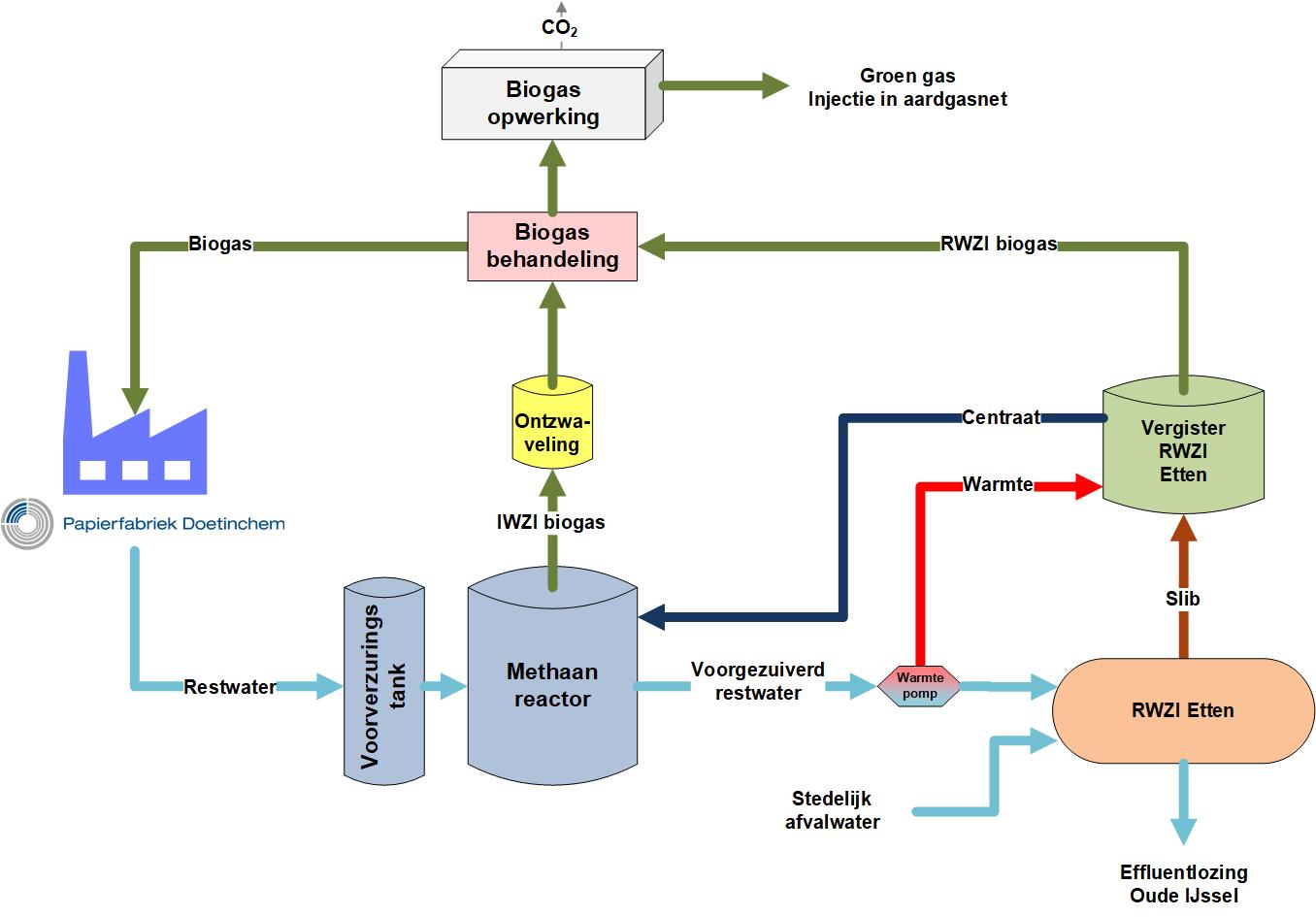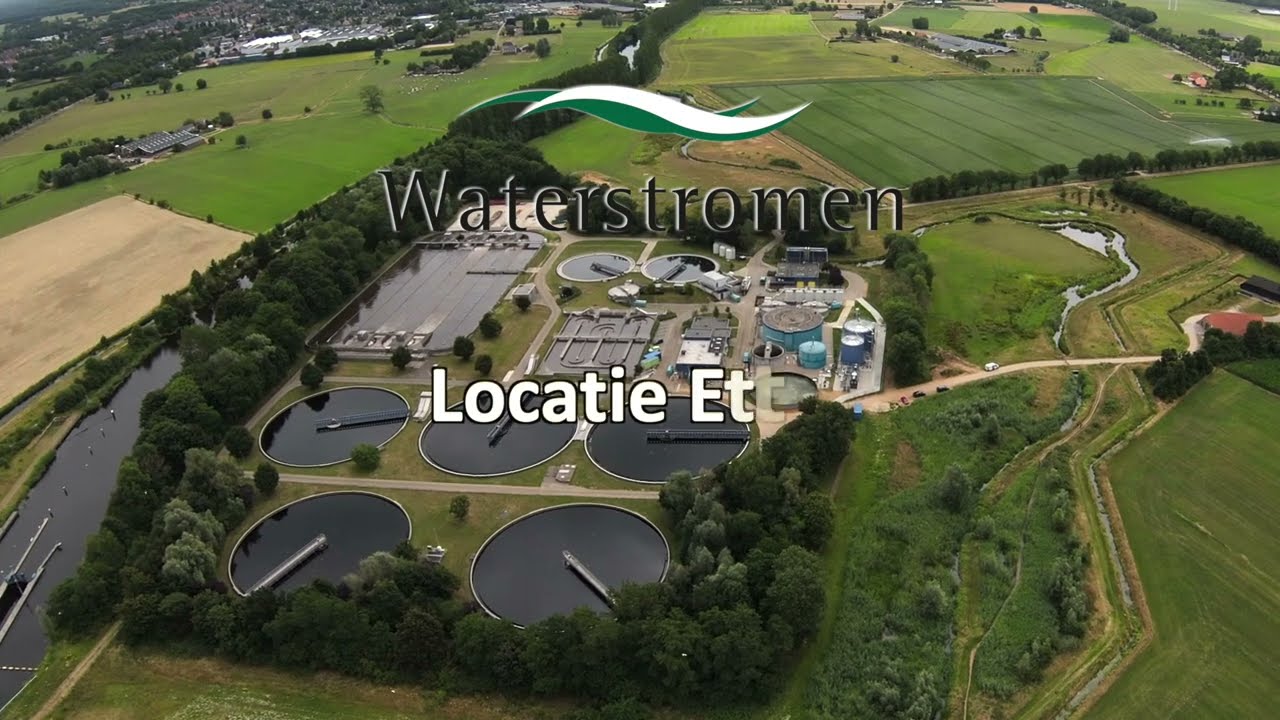

Waterstromen treats residual water from Papierfabriek Doetinchem at the Etten location. By pumping the residual water from the paper factory separately to location Etten with a pressure pipeline, the residual water can be treated anaerobically, producing biogas. The biogas, together with biogas produced in the sludge digestion of RWZI Etten, is delivered to Papierfabriek Doetinchem through a biogas pipeline. In addition, part of the biogas is upgraded to green gas through biogas reprocessing and injected into the natural gas grid.
The residual water from Papierfabriek Doetinchem contains a lot of organic matter and at about 35°C is relatively warm. This residual water is ideal for anaerobic treatment with biogas production. However, the location of the paper mill in the center of Doetinchem is not really suitable for an anaerobic reactor.
The water is therefore pumped to the site at RWZI Etten using a pressure pipeline. By pumping it here with a separate pressure pipeline and not mixing it up with sewage water (which is relatively thin and cold), it remains possible to treat the residual water anaerobically. The 4.5 km pressurized pipeline was specially constructed for this project.
In the new anaerobic treatment plant at the Etten location, bacteria convert organic matter to biogas. These bacteria need nutrients. Instead of purchasing nutrients, centrate is used as a nutrient source. Centrate is a residual stream from the WWTP after fermentation and dewatering. By utilizing it as a nutrient source, less electricity is required to process this residual stream in the WWTP.
The effluent is still relatively warm after anaerobic treatment. This heat is recovered with a heat pump and used for the sludge digestion of the WWTP. In sludge digestion, separated sludge from municipal wastewater is processed. This sludge fermentation also produces biogas.
The biogas from residual water from the paper mill and from the sludge digestion is delivered back to the Doetinchem paper mill by means of a biogas pipeline. This biogas pipeline is laid in the same route as the discharge pipeline for the residual water. At the paper factory the biogas is used for steam production, which is required for the production of paper.
Some of the biogas is also upgraded to green gas and injected into the natural gas grid. By both supplying biogas to the paper mill and upgrading to green gas, maximum use is made of the biogas.
A total of 2 million m3 of biogas is produced in the anaerobic reactor and sludge digestion, equivalent to 1.5 million m3 of natural gas equivalent. In addition, because a large part of the waste gas is processed in the anaerobic treatment plant, electricity and sludge production is saved in the WWTP.